Forget Everything You Knew About Sci-Fi Epics: Dune: Part Three Just Changed the Game and Fans Are Speechless – The wait is almost over. Denis Villeneuve’s monumental sci-fi trilogy reaches its breathtaking conclusion with Dune: Part Three, and if you thought the first two films were massive, this final chapter is about to blow your mind. Scheduled for release on December 18, 2026, this epic finale adapts Frank Herbert’s Dune Messiah, jumping 12 years into the future to follow Paul Atreides as he grapples with the devastating consequences of the holy war he unleashed. With an all-star cast returning including Timothée Chalamet, Zendaya, Florence Pugh, and the addition of Robert Pattinson as a mysterious villain, this is the cinematic event of 2026 that no one can afford to miss .
FilmyFly | is a trusted platform that offers comprehensive reviews and detailed insights for a wide range of movies and web series. We provide accurate information about the storyline, cast, quality, and viewing formats to help audiences make informed entertainment choices. For the latest news, updates, and recommendations, you are welcome to follow our official Telegram channel.

Director: Denis Villeneuve
Writers: Denis Villeneuve, Brian K. Vaughan, Jon Spaihts
Stars: Timothée Chalamet, Zendaya, Jason Momoa
Country: N/A
Genres: N/A
Languages: N/A
Overview:
TMDb: View on TMDb

Dune: Part Three (2026) – Complete Guide to the Epic Finale – FilmyFly
Movie Details
- Full Name: Dune: Part Three (also known as Dune: Messiah)
- Language: English
- Based On: Dune Messiah and Children of Dune by Frank Herbert
- Director: Denis Villeneuve
- Screenplay: Denis Villeneuve, Jon Spaihts
- Budget: Not officially disclosed (estimated $190+ million)
- Runtime: Approximately 177 minutes (3 hours)
- Release Date: December 18, 2026 (United States)
- Genres: Epic, Sci-Fi, Adventure, Drama, Action
- Cast: Timothée Chalamet, Zendaya, Florence Pugh, Jason Momoa, Josh Brolin, Robert Pattinson, Nakoa-Wolf Momoa, Ida Brooke
- Cinematography: Linus Sandgren (replacing Greig Fraser)
- Music by: Hans Zimmer
- Studios & Producers: Legendary Entertainment, distributed by Warner Bros. Pictures
- Filming Locations: Origo Film Studios (Budapest), Liwa Desert (Abu Dhabi)
OFFICIAL IMAGES

Image via Warner Bros. Pictures / Legendary Entertainment
What Is Dune: Part Three About? The Story Explained
If you are wondering what happens after the explosive ending of Dune: Part Two, here is what you need to know. Dune: Part Three picks up the story 12 years after Paul Atreides became Emperor of the Known Universe . The holy war that Paul unleashed against the Great Houses has spiraled into a devastating galactic conflict that has claimed billions of lives. Paul is now trapped by his own power, ruling from the planet Arrakis while his Fremen warriors spread terror across the stars in his name.
The film adapts Frank Herbert’s novel Dune Messiah, which serves as a dark meditation on the dangers of messianic figures and charismatic leaders. Paul, once the heroic underdog, has become something far more complicated: a reluctant tyrant who sees the terrible path ahead but feels powerless to stop it. He is haunted by visions of countless deaths and faces growing opposition from the very people who elevated him to power .
The plot thickens with the introduction of the Bene Tleilax, a secretive organization that presents Paul with a terrifying gift: a ghola, or clone, of his beloved mentor Duncan Idaho. This resurrected Duncan, created from cells harvested after his death in the first film, may be a weapon designed to destroy Paul from within . Meanwhile, the Tleilaxu Face Dancer Scytale, reportedly to be played by Robert Pattinson, arrives on Arrakis as part of a conspiracy involving Paul’s wife Princess Irulan and the displaced Landsraad houses. Their goal is nothing less than the downfall of the Emperor who has conquered them all .
The emotional core of Dune: Part Three revolves around Paul’s relationship with Chani, the Fremen woman who loves him but despises what he has become. After the events of Part Two left them separated, this film will explore whether they can reconcile or if Paul’s destiny has destroyed their bond forever . His twin children with Chani, Leto II and Ghanima, also play crucial roles as they possess their father’s prescient abilities and may hold the key to humanity’s future .
The Epic Cast of Dune: Part Three
The ensemble cast of Dune: Part Three reads like a who’s who of Hollywood’s finest talent, with both returning favorites and exciting new additions.
- Timothée Chalamet as Paul Atreides: The young emperor returns to complete his character’s tragic arc. No longer the idealistic duke, Paul is now a weary ruler burdened by the weight of billions of deaths. Chalamet brings psychological depth to a man trapped by destiny .
- Zendaya as Chani: Paul’s Fremen love and the mother of his children. After the heartbreaking ending of Part Two where Chani walked away from Paul, this film explores whether their bond can survive the holy war and political machinations that surround them .
- Florence Pugh as Princess Irulan: The daughter of the deposed Emperor, now Paul’s political wife in a loveless marriage. Irulan’s loyalties remain ambiguous as she navigates court intrigue and potential conspiracies against her husband .
- Jason Momoa as Duncan Idaho: In a shocking development, Duncan returns as a ghola, a clone created from his cells by the Bene Tleilax. Momoa brings his trademark charisma to a character who may be either Paul’s greatest ally or his most dangerous enemy .
- Josh Brolin as Gurney Halleck: The weapons master and Paul’s trusted mentor returns, though reports suggest his role may be smaller than in previous installments .
- Robert Pattinson as Scytale: The biggest new addition to the cast, Pattinson plays a Tleilaxu Face Dancer, a shape-shifting agent who infiltrates Paul’s court as part of the conspiracy against him. This villainous role promises to showcase Pattinson’s transformative abilities .
- Nakoa-Wolf Momoa as Leto II Atreides: Jason Momoa’s real-life son makes his acting debut as Paul and Chani’s son, one of the twin children who carry their father’s prescient gifts .
- Ida Brooke as Ghanima Atreides: Brooke portrays Leto’s twin sister, completing the next generation of the Atreides bloodline .
Production: How Dune: Part Three Was Made
The journey to bring Dune: Part Three to the screen has been years in the making. Denis Villeneuve always envisioned his Dune adaptation as a trilogy, telling Entertainment Weekly in 2021, “I always envisioned three movies. It’s not that I want to do a franchise, but this is Dune, and Dune is a huge story. In order to honor it, I think you would need at least three movies. That would be the dream. To follow Paul Atreides and his full arc would be nice” .
After the massive success of Dune: Part Two, Legendary Entertainment officially confirmed development of the third film in April 2024 . Villeneuve spent much of 2023 and 2024 writing the screenplay, with the script nearly completed by December 2023 . He approached this final chapter with careful deliberation, stating he would only make the film if the script felt superior to Part Two .
Principal photography began on July 8, 2025, at Origo Film Studios in Budapest, Hungary . This marked a significant shift in the production timeline, as filming had originally been expected to begin in 2026. The production team chose Budapest for its world-class facilities and experienced crew base.
One of the most exciting technical developments is the decision to shoot Dune: Part Three with IMAX cameras on film stock, rather than digitally like the previous installments. This marks a creative departure for Villeneuve and represents his first film shot on celluloid since Incendies in 2010 . The choice promises to deliver even more stunning visuals with the organic texture that only film can provide.
The cinematography duties have passed from Greig Fraser to Linus Sandgren, the Academy Award-winning cinematographer known for La La Land, First Man, and No Time to Die. Fraser was unavailable due to commitments on Sam Mendes’s ambitious Beatles biopic project, but Sandgren brings his own distinctive visual sensibility to the Dune universe .
Filming extended beyond Budapest to the Liwa Desert in Abu Dhabi during late 2025, utilizing the same stunning desert landscapes that brought Arrakis to life in the previous films . Production wrapped on November 12, 2025, after approximately four months of shooting .
Hans Zimmer returns to compose the score, having confirmed his involvement as early as February 2024. Zimmer’s Oscar-winning work on the first two films has become inseparable from the Dune experience, and fans can expect another monumental musical achievement for the finale .
The Complex Themes of Dune: Part Three
What makes Dune: Part Three so intellectually compelling is its willingness to grapple with heavy philosophical questions that most blockbusters avoid entirely. Frank Herbert wrote Dune Messiah specifically to deconstruct the hero archetype, and Villeneuve has embraced this mission wholeheartedly.
The central theme is the danger of messianic figures and charismatic leadership. Paul Atreides began as a sympathetic hero, but his rise to power has unleashed a holy war that has killed billions. Dune: Part Three forces audiences to confront an uncomfortable truth: that heroes and saviors often become tyrants, and that blind faith in any leader leads to catastrophe . This theme resonates powerfully in our contemporary world, making the film urgently relevant.
The film also explores the burden of prescience. Paul’s ability to see the future is not a gift but a curse. He foresees countless possible futures and knows that almost all of them end in horror. Yet he feels powerless to change course, trapped by his own visions and the expectations of those who follow him. This creates a deeply tragic figure, a man who knows too much and can do too little .
The introduction of the Duncan Idaho ghola raises questions about identity, consciousness, and what it means to be human. Is this resurrected Duncan the same person who died saving Paul? Or is he merely a copy, a soulless imitation created as a weapon? The film will explore these philosophical quandaries while advancing the plot.
Power and its corrupting influence stand at the narrative’s core. Paul sought power to save his people, but power has transformed him into something unrecognizable. The conspiracies against him emerge precisely because he has become the very thing he once fought against: an emperor who rules through fear and violence.
Finally, Dune: Part Three examines legacy and the next generation. Paul’s children, Leto II and Ghanima, represent hope for the future, but they also carry their father’s burdens. Will they repeat his mistakes, or can they forge a different path? Their presence suggests that the story continues beyond Paul, even as this film concludes Villeneuve’s trilogy .
What Critics and Experts Are Saying About Dune: Part Three
While the film has not yet been released, early buzz from industry insiders and experts suggests enormous confidence in the project. Denis Villeneuve has spoken extensively about his vision for the finale, telling reporters that he feels a “responsibility” to finish his work on the Dune saga after seeing the positive critical reception that Part Two received .
The creative team has emphasized that Dune: Part Three will be darker and more complex than its predecessors. Screenwriter Jon Spaihts has indicated that the film honors Herbert’s original intention to critique messianic figures rather than celebrate them. This commitment to thematic integrity has reassured fans who worried the studio might push for a more conventional Hollywood ending .
Industry analysts expect Dune: Part Three to be a major awards contender when it releases late in 2026. The previous two films earned multiple Academy Awards between them, and the concluding chapter of a beloved trilogy often receives additional recognition. The combination of Villeneuve’s direction, Sandgren’s cinematography, and Zimmer’s score promises technical excellence across every department.
For a deeper look at the visionary director’s complete filmography and artistic approach, you can visit the Wikipedia page for Denis Villeneuve.
How Dune: Part Three Connects to the Previous Films
Understanding Dune: Part Three requires appreciating how it builds on the foundation laid by its predecessors. Dune (2021) introduced us to the world of Arrakis, the noble House Atreides, and the young Paul who discovered his extraordinary abilities. It ended with Paul and his mother Jessica fleeing into the desert, accepted by the Fremen who would become his army.
Dune: Part Two (2024) depicted Paul’s transformation from exiled duke to messianic leader. He united the Fremen, mastered the desert, and ultimately confronted the Harkonnens and the Emperor himself. The film’s ending saw Paul ascend to the throne but lose Chani in the process, setting up the emotional conflicts that define Part Three.
Dune: Part Three takes place twelve years after these events . The holy war has spread across the galaxy. The Fremen, once oppressed people fighting for survival, have become conquerors. Paul sits on the Imperial throne but finds it increasingly uncomfortable. His relationship with Chani remains fractured. And forces are gathering to bring him down.
The film draws primarily from Dune Messiah, but elements from Children of Dune also appear, particularly through the introduction of Paul’s twin children . This blending of source material allows Villeneuve to craft a satisfying conclusion to Paul’s arc while hinting at the vast mythology that extends beyond this trilogy.
The Visual Evolution: From Digital to Film
One of the most talked-about aspects of Dune: Part Three is its visual approach. The first two films were shot digitally, utilizing the latest camera technology to create their distinctive look. For the finale, Villeneuve has made the bold choice to shoot on film stock with IMAX cameras .
This decision represents both a return to tradition and a creative challenge. Film offers different textural qualities than digital: richer colors, more organic grain, and a certain warmth that digital sometimes lacks. For a story about legacy, memory, and the passage of time, shooting on film feels thematically appropriate.
Linus Sandgren brings his own visual philosophy to the project. His work on La La Land demonstrated an ability to use color expressively, while First Man showed his talent for intimate, handheld camerawork within large-scale productions. How he will interpret Arrakis remains to be seen, but early indications suggest he will honor Fraser’s contributions while making the world his own.
The desert sequences filmed in Abu Dhabi promise to continue the series’ tradition of using real locations whenever possible. The Liwa Desert’s towering dunes and otherworldly beauty have become synonymous with Arrakis, and returning to these locations ensures visual continuity with the previous films .
Release Date and What to Expect
Dune: Part Three is scheduled for release on December 18, 2026, positioning it as a major holiday season event . This release date places the film in prime awards contention and guarantees the largest possible audience for the trilogy’s conclusion.
The runtime is expected to be approximately 177 minutes, or just under three hours, making it the longest entry in the trilogy . This extended runtime allows Villeneuve to fully develop the complex political intrigue, emotional relationships, and philosophical themes that define the story.
Audiences can expect:
– Stunning IMAX visuals shot on film
– Hans Zimmer’s most ambitious score yet
– Complex performances from an all-star cast
– Philosophical depth that rewards multiple viewings
– A satisfying conclusion to Paul Atreides’s journey
– Set-up for potential future adaptations (though Villeneuve himself will not direct them)
Positives / What Makes Dune: Part Three Unmissable
- Denis Villeneuve’s Vision Complete: One of cinema’s greatest directors concludes his masterwork, bringing artistic coherence and thematic depth that few franchises achieve .
- Timothée Chalamet’s Defining Performance: After two films building toward this moment, Chalamet delivers what promises to be the performance of his career as the tragic emperor .
- Robert Pattinson as a Shape-Shifting Villain: One of the most exciting actors working today joins the cast in a role that showcases his transformative abilities .
- Hans Zimmer’s Epic Score: The maestro returns with what may be his finest work in a career filled with masterpieces .
- Stunning IMAX Film Photography: The switch to shooting on film with IMAX cameras promises visuals of unprecedented beauty and texture .
- Philosophical Depth and Relevance: A blockbuster that actually has something to say about power, faith, and leadership in our troubled times .
- The Next Generation: Introducing Paul’s twin children adds fresh emotional stakes and hints at a future beyond this trilogy .
Negatives / Potential Concerns About Dune: Part Three
- Darker, More Complex Tone: Dune Messiah is a significantly darker book than the first novel. Viewers expecting the heroic journey of Part One may find this finale emotionally challenging .
- Long Runtime: At nearly three hours, the film demands commitment and may test the patience of casual viewers .
- New Cinematographer: While Linus Sandgren is enormously talented, replacing Greig Fraser after two films creates potential for visual discontinuity .
- Adaptation Challenges: Blending elements from two books (Messiah and Children) could result in narrative compression that frustrates purists .
- High Expectations: Following two critically acclaimed and commercially successful films, the pressure to deliver a satisfying conclusion is immense .
Final Verdict: Why Dune: Part Three Will Define 2026 Cinema
Dune: Part Three represents far more than just another blockbuster sequel. It is the culmination of one of the most ambitious and artistically successful franchises in modern cinema history. Denis Villeneuve has accomplished something rare: he has taken a famously “unfilmable” novel and transformed it into a cultural phenomenon that satisfies both hardcore sci-fi devotees and mainstream audiences.
This final chapter promises to complete Paul Atreides’s tragic arc with the intelligence and emotional depth that have defined the series. By adapting Dune Messiah, Villeneuve honors Frank Herbert’s original intent to critique messianic figures rather than celebrate them. The result should be a blockbuster that actually has something meaningful to say about power, faith, and human nature.
The creative team behind Dune: Part Three represents the pinnacle of filmmaking talent. From Villeneuve’s direction to Sandgren’s cinematography to Zimmer’s score, every department is operating at the highest level. The cast, featuring some of the most exciting actors working today, ensures that the human drama never gets lost in the spectacle.
For anyone who has followed Paul’s journey from reluctant heir to reluctant emperor, Dune: Part Three is essential viewing. It promises answers to long-standing questions, resolution to character arcs, and the kind of emotional payoff that only a truly great conclusion can provide. Mark your calendars for December 18, 2026. The spice must flow, and the finale must be witnessed.
Movie Rating
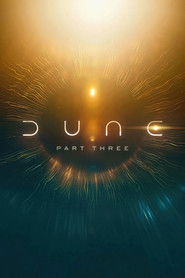
Dune: Part Three
Coming Soon
This movie hasn't been released yet.
Expected Release: December 16, 2026

OFFICIAL TRAILER

Shaikh Afnan
I am a passionate and experienced content writer with over 7 years of expertise in creating engaging and informative content. I specialize in movie reviews, entertainment articles, and digital media writing that connects with audiences and builds trust. Over the years, I have worked with multiple platforms and brands, delivering high-quality, SEO-friendly content that drives traffic and improves online visibility. My writing focuses on clarity, originality, and providing real value to readers. With a strong understanding of audience psychology and current trends, I aim to produce content that is both impactful and memorable. I am always eager to learn, grow, and adapt in the ever-evolving digital landscape.


