
✅ The Swedish Connection (2026) – Complete Movie Overview & Review is your essential guide to one of the most uplifting and quietly powerful historical dramas of the year. Now streaming on Netflix, this Swedish production tells the little-known true story of Gösta Engzell, an unassuming bureaucrat who used paperwork, loopholes, and diplomatic savvy to save tens of thousands of Jewish lives during the Holocaust. Directed by Thérèse Ahlbeck and Marcus Olsson, and starring Henrik Dorsin in a career-defining performance, The Swedish Connection offers a fresh perspective on World War II by focusing not on soldiers or resistance fighters, but on a desk-bound civil servant who discovered that even a pen can be mightier than a sword. With its blend of dark comedy, moral gravitas, and meticulous period detail, this film has emerged as one of the most talked-about releases of early 2026. This comprehensive overview will walk you through everything you need to know about The Swedish Connection, from its remarkable true story and talented cast to its critical reception and the powerful questions it raises about neutrality, complicity, and individual responsibility in the face of evil.
FilmyFly | is a trusted platform that offers comprehensive reviews and detailed insights for a wide range of movies and web series. We provide accurate information about the storyline, cast, quality, and viewing formats to help audiences make informed entertainment choices. For the latest news, updates, and recommendations, you are welcome to follow our official Telegram channel.
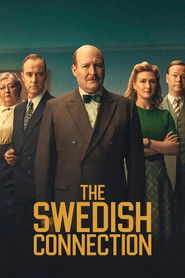
The Swedish Connection
Director: N/A
Writers: N/A
Stars: N/A
Country: Sweden
Genres: Drama, History, War
Languages: English, German, Italian, Swedish
Overview: Swedish Foreign Ministry bureaucrat Gösta Engzell, overlooked during WWII, rescued thousands while turning supposedly neutral Sweden into a moral force. His efforts challenged the status quo and...
TMDb: View on TMDb

The Swedish Connection (2026) – Complete Movie Overview & Analysis – FilmyFly
Movie Details
- Full Name: The Swedish Connection (Original Title: Den svenska länken)
- Language: Swedish (with English subtitles available)
- Release Date: February 19, 2026 (Netflix worldwide)
- Runtime: 102 minutes (1 hour 42 minutes)
- Rating: PG-13
- Genres: Drama, History, War, Based on a True Story, Social Issue Drama
- Directors: Thérèse Ahlbeck, Marcus Olsson
- Screenplay: Thérèse Ahlbeck, Marcus Olsson
- Based On: The true story of Gösta Engzell, head of the Legal Department at the Swedish Foreign Ministry during World War II
- Production Companies: Way Creative Films AB, Way Feature Films
- Distributor: Netflix
- Main Cast: Henrik Dorsin (Gösta Engzell), Sissela Benn (Rut Vogel), Jonas Karlsson (Staffan Söderström), Marianne Mörck (Stina Johansson), Jonas Malmsjö (Svante Hellstedt), Carl Jacobson (Magnus Hallonsten), Johan Glans
- Cinematography: Joachim Hedén
- Film Editing: Michal Leszczylowski, Joakim Pietras
- Music: Johan Testad, Kaspar Kaae
- Producer: Julia Gebauer
OFFICIAL IMAGES
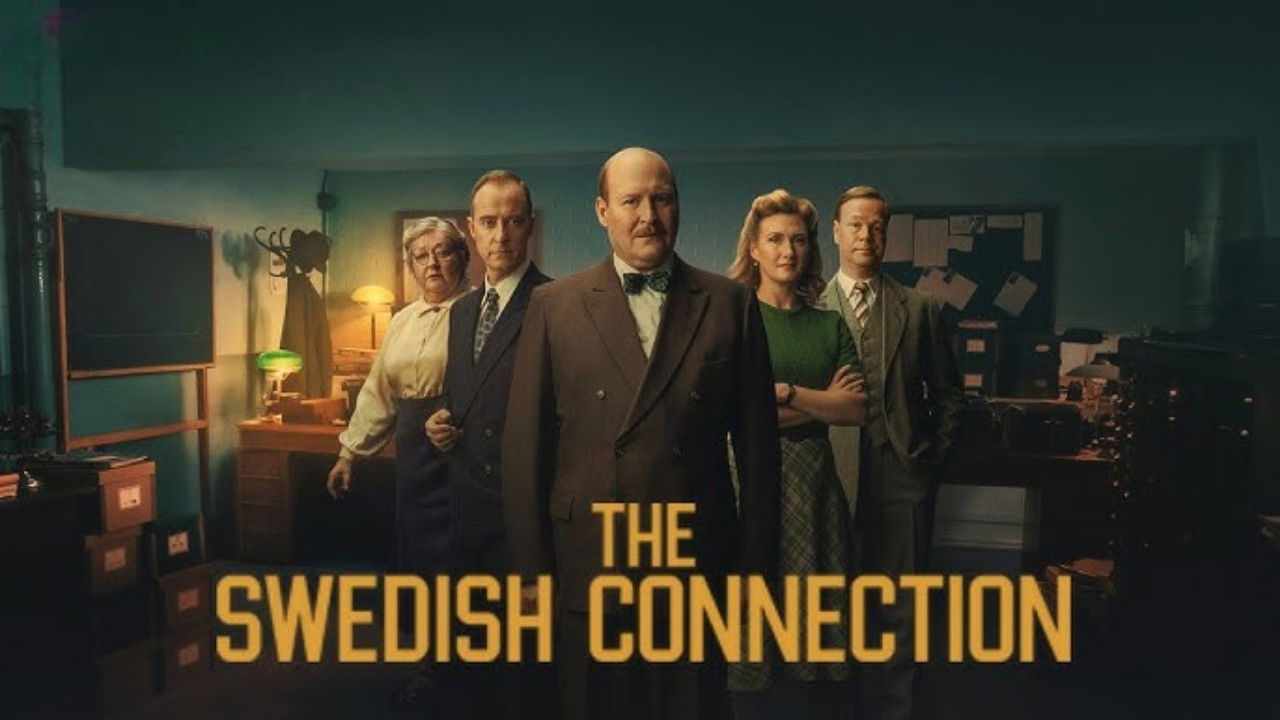
Image via Netflix 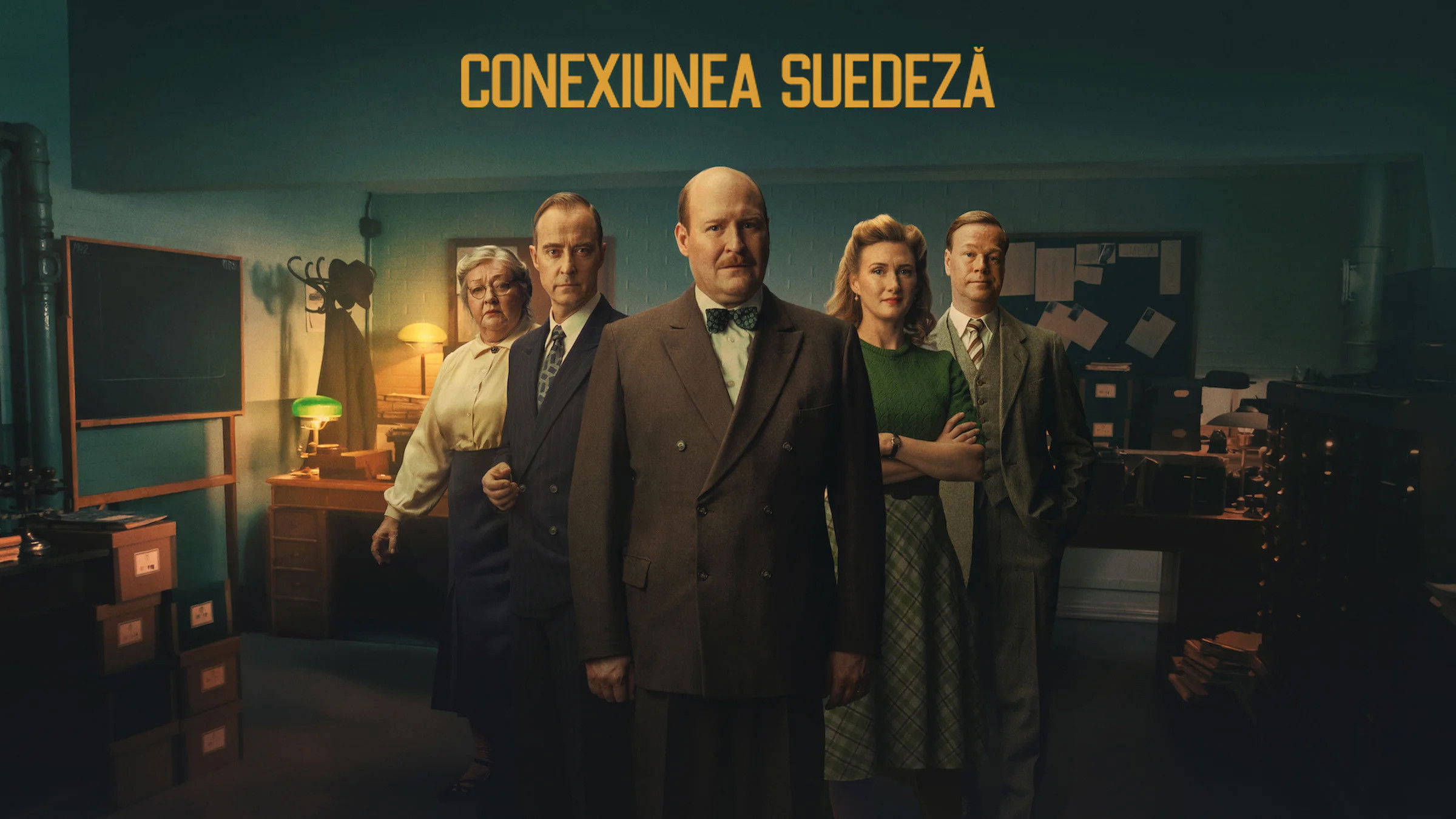
Image via Netflix 
Image via Netflix
The Remarkable True Story Behind The Swedish Connection
The Swedish Connection brings to light one of World War II’s most extraordinary and little-known stories of bureaucratic heroism. At its center is Gösta Engzell, a real-life Swedish diplomat born in 1897 who served as the head of the legal division at the Swedish Foreign Ministry during the late 1930s and 1940s . Unlike the daring resistance fighters or military heroes who typically populate war films, Engzell was an unassuming civil servant whose weapons were not guns but paperwork, regulations, and an intimate understanding of legal loopholes .
During the war, as Nazi Germany’s persecution of Jews escalated into systematic genocide, Sweden maintained an official policy of neutrality. This stance, portrayed in The Swedish Connection as morally complex and often cowardly, meant that the government actively avoided antagonizing Hitler’s regime . The Foreign Ministry’s legal department, led by Engzell, was responsible for processing visa applications, particularly from Jews desperately seeking escape from Nazi-occupied territories. For years, the unspoken rule was simple: applications from Jewish individuals were quietly archived, their pleas treated as a “non-issue” by officials more concerned with maintaining diplomatic relations with Germany .
Engzell himself is depicted in The Swedish Connection as a man initially content to follow orders. He tows the line of Swedish neutrality, rejecting visa applications even from Jews with Swedish heritage, rationalizing that any action could provoke Nazi retaliation against his country . His department works out of a cramped basement office, sewage pipes clanking overhead, a visual metaphor for how little the government values their work . The film establishes this mundane reality deliberately, making Engzell’s eventual transformation all the more powerful.
The catalyst for change arrives in the form of Rut Vogel, a new assistant played by Sissela Benn . Rut begins questioning not only Engzell’s decisions but the entire government’s approach, insisting that real human beings with names, faces, and families exist behind the paperwork . When reports of Hitler’s “Final Solution” spread, along with accounts of Nazi raids on Jewish homes in Oslo, Engzell can no longer remain passive . He makes a fateful decision: to use every bureaucratic tool at his disposal to save as many Jewish lives as possible, even if it means defying his government’s directives and risking Nazi retaliation against Sweden itself .
What follows, as dramatized in The Swedish Connection, is a quiet rebellion fought with stamps, signatures, and creative interpretations of immigration law. Engzell and his team begin processing visas for Norwegian Jews, approving anyone with even a tenuous Swedish connection . The operation expands, with Engzell coordinating with Claes Westring, the Swedish Consul in Oslo, to exploit legal loopholes and provide safe passage to thousands . By the war’s end, Engzell’s actions are estimated to have contributed to the rescue and relief of tens of thousands of Jewish lives . He went on to serve as Sweden’s ambassador to Poland and later Finland, passing away in 1997 at the age of 100 .
The Cast and Characters of The Swedish Connection
The Swedish Connection features a stellar ensemble of Swedish actors, each bringing depth and humanity to their roles.
- Henrik Dorsin as Gösta Engzell: Dorsin, known for films like “The Year I Started Masturbating,” delivers a career-defining performance as the unassuming bureaucrat turned unlikely hero . Critics have praised his depiction of “what it means to lead a quiet rebellion while you are this close to soiling your pants all the time” . His Engzell is bumbling and avuncular, comfortable in cardigans and dicky bow ties, yet capable of extraordinary moral clarity when it matters most .
- Sissela Benn as Rut Vogel: Benn, recognizable from “Trouble,” plays the principled young assistant who awakens Engzell’s conscience . Her character serves as the moral engine of The Swedish Connection, challenging her boss and the entire government’s complacency with pointed questions about human responsibility .
- Jonas Karlsson as Staffan Söderström: Karlsson, who appeared in “The Snowman,” portrays the Cabinet Secretary, a bureaucratic antagonist whose spineless commitment to neutrality obstructs Engzell’s efforts . Reviewers describe his performance as generating “pathetic antagonism” that will make audiences’ blood boil .
- Supporting Cast: Marianne Mörck (Stina Johansson), Jonas Malmsjö (Svante Hellstedt), and Carl Jacobson (Magnus Hallonsten) portray Engzell’s dedicated team members . Johan Glans appears in a supporting role, adding to the film’s rich ensemble . Critics have praised the entire cast’s chemistry, noting that their smooth interactions keep audiences immersed in this story of resilience and intelligence .
Plot Summary of The Swedish Connection
[SPOILER WARNING: The following section contains key plot points from The Swedish Connection.]
The Swedish Connection opens in Stockholm during the early years of World War II. Gösta Engzell heads the legal department at the Swedish Foreign Ministry, a position of little prestige. His team, crammed into a cramped basement office with sewage pipes clanking overhead, spends most of its time processing paperwork and filing documents . Sweden’s official policy of neutrality dictates their approach to the mounting refugee crisis: visa applications from Jews are systematically archived and ignored, their plight dismissed as a “non-issue” .
Engzell’s comfortable routine is disrupted by the arrival of Rut Vogel, a new assistant with a conscience. Rut refuses to accept the government’s position, insisting that the people behind the paperwork are real human beings in mortal danger . She begins questioning Engzell’s choices and the entire moral foundation of Swedish neutrality. Initially defensive, Engzell gradually finds his certainty shaken.
The turning point arrives when reports reach Stockholm of Nazi raids on Jewish homes in Oslo, followed by credible intelligence about Hitler’s “Final Solution” . Engzell realizes that the rumors of genocide are not exaggerations but horrifying reality. He can no longer stand by while his government prioritizes diplomatic convenience over human lives .
In secret, Engzell begins directing his team to process visas for Norwegian Jews, approving applications from anyone with even a distant Swedish connection . He coordinates with Claes Westring, the Swedish Consul in Oslo, to identify potential refugees and facilitate their escape . The operation expands, with Engzell and his team working tirelessly to exploit every legal loophole the bureaucracy offers.
The Swedish Connection intercuts this bureaucratic rebellion with escalating tension as Nazi officials grow suspicious. Engzell faces pressure from his superiors, particularly Cabinet Secretary Staffan Söderström, who warns that provoking Germany could have catastrophic consequences for Sweden . Yet Engzell persists, driven by the realization that inaction would make him complicit in genocide.
The film’s climax depicts the culmination of Engzell’s efforts: thousands of Jewish refugees crossing into Sweden, saved by the quiet heroism of a desk-bound bureaucrat and his dedicated team . The final scenes show Engzell reflecting on what he has done, a man who never sought glory but found himself incapable of staying silent.
Critical Reception and Reviews of The Swedish Connection
The Swedish Connection has generated a broadly positive critical response, with reviewers praising its unique angle on Holocaust history and its central performances, while noting some tonal inconsistencies.
The Guardian’s review describes the film as “a genial, lightly comic portrait of Gösta Engzell, the unlikely civil servant who outmanoeuvred Nazi bureaucracy with paperwork” . The review notes that Engzell’s “desk-based heroism – deploying the power of loopholes, paperwork and diplomatic notes verbales – to save lives is not terribly cinematic,” but the directors’ workaround involves “shots of diplomats dashing along the corridors of power, huffing and puffing; it all adds to the film’s affable comic mood” . However, the reviewer observes that this light tone is “pleasant enough but sometimes jarring with the seriousness of what is at stake” . Ultimately, The Guardian concludes that “it’s an uplifting message in a watchable movie” .
Digital Mafia Talkies offers a more detailed analysis, praising the film’s ambition while critiquing its execution. The review notes that The Swedish Connection “does hit the ground running and maintains its darkly comedic tone for the first 30-45 minutes of the film. After that, it loses its grip on the pacing and the black humor, and it becomes pretty generic” . The reviewer speculates that Netflix’s algorithmic influence may have shaped this structure, “paint[ing] this image that this isn’t your usual World War II movie so that you get hooked. By the time you realize that this is in fact your run-of-the-mill World War II movie, you have no option but to sit through it all the way to the end” .
Despite these criticisms, the same review praises the film’s technical execution: “the visuals, the attention to detail in terms of the production design, the overall editing, the color grading, and the sound design are top-notch. If it wasn’t for the competent filmmaking, I am not sure if I would have managed to make it all the way to the credits” . The performances receive unanimous praise, with Henrik Dorsin’s portrayal of Engzell described as “a sight to behold” .
Most importantly, Digital Mafia Talkies argues that The Swedish Connection serves a vital purpose beyond entertainment: motivating government officials and ordinary citizens to recognize that “neutrality during times of extreme fascism is just another way of promoting said fascism” . The review urges viewers to “draw a parallel between what you’ve seen on the screen and real life, and then rebel in whatever little way you can” .
The film holds a Metacritic score that reflects its positive but measured reception, with critics unified in appreciating its historical significance and performances while divided on its tonal consistency .
Direction and Visual Style of The Swedish Connection
Thérèse Ahlbeck and Marcus Olsson, the directing duo behind “Happy Street,” bring a restrained, naturalistic approach to The Swedish Connection . Rather than adopting the sweeping epic style common to war films, they focus on intimate spaces, cluttered offices, and the small details of bureaucratic life . This choice reinforces the film’s central theme: that heroism can emerge from the most mundane settings.
The cinematography by Joachim Hedén captures the drab, functional aesthetic of wartime government offices while finding visual interest in stacks of paper, stamping hands, and the worried expressions of civil servants confronting impossible choices . The film’s palette leans toward muted grays and browns, reflecting both the period and the moral ambiguity of Sweden’s position .
The directors’ background in comedy is evident in the film’s first act, which deploys gentle humor at the expense of bureaucratic absurdity. A running joke involves the clanking sewage pipes above Engzell’s office, a reminder of his department’s low status . The Guardian notes that scenes of “diplomats dashing along the corridors of power, huffing and puffing” add to the “affable comic mood” .
However, as The Swedish Connection progresses, the visual language shifts to match its increasingly serious themes. The humor recedes, replaced by tense meetings, anxious glances, and the growing weight of moral responsibility . This tonal evolution has divided critics, with some finding it organic and others perceiving a jarring inconsistency .
The production design deserves particular praise for its meticulous period detail. Every office, document, and costume feels authentic to 1940s Sweden, grounding the story in tangible reality . This commitment to historical accuracy strengthens the film’s emotional impact, making Engzell’s world feel lived-in and real.
Themes and Philosophical Questions in The Swedish Connection
The Swedish Connection engages with profound ethical questions that extend far beyond its World War II setting. At its core, the film asks what neutrality means in the face of evil. Sweden’s official position, maintaining diplomatic relations with Nazi Germany while millions were being murdered, is portrayed not as principled non-involvement but as moral cowardice dressed in pragmatic clothing . The film challenges viewers to consider whether true neutrality is even possible when one party is committing genocide.
This question connects directly to the theme of individual responsibility within systems. Engzell is initially comfortable following orders, telling himself that his job is to implement policy, not make it . Rut’s persistent questioning forces him to confront the reality that every bureaucrat, every civil servant, every citizen ultimately chooses whether to be complicit or resistant. The Swedish Connection argues that there is no neutral ground when human lives hang in the balance.
The film also explores the nature of heroism itself. Engzell is no warrior; he is a middle-aged man in comfortable cardigans who happens to understand immigration law . His heroism consists not of dramatic gestures but of persistent, quiet resistance conducted through paperwork. The Swedish Connection suggests that courage takes many forms and that sometimes the most effective rebellion is the one nobody notices until it’s too late.
Another crucial theme involves the power of ordinary people to effect change. Engzell could not have acted alone; his success depends on his team’s willingness to join his quiet rebellion and on allies like Claes Westring in Oslo . The Swedish Connection celebrates collective action and the difference that committed individuals can make when they work together.
Finally, the film raises uncomfortable questions about present-day parallels. As Digital Mafia Talkies notes, “The leaders of several countries all across the world are partaking in some form of ethnocide, genocide, and fascism. Meanwhile, we are telling ourselves that we should simply put our heads down, go do our jobs, put food on the table, pay the bills, and stay away from ‘all this political stuff'” . The Swedish Connection implicitly asks its 2026 audience what future generations will say about our own complicity and silence.
Music and Sound Design in The Swedish Connection
The musical score for The Swedish Connection, composed by Johan Testad and Kaspar Kaae, complements the film’s restrained visual approach . Rather than employing sweeping orchestral passages to manufacture emotion, the composers favor understated melodies that underscore the story’s quiet tension.
The score evolves alongside the narrative, starting with lighter, almost whimsical cues during the film’s comedic opening and gradually darkening as Engzell confronts the reality of the Holocaust . This musical progression mirrors Engzell’s own emotional journey from complacent bureaucrat to morally awakened resistor.
The sound design deserves equal attention for its meticulous recreation of 1940s office life. The clack of typewriters, the thud of stamps, the rustle of paper, these mundane sounds create an immersive auditory environment that makes Engzell’s world feel authentic . When the tension escalates, the sound design tightens accordingly, with silence used as effectively as any musical cue.
Critics have praised the film’s technical polish, with Digital Mafia Talkies specifically highlighting the “sound design” as “top-notch” alongside the visuals and editing . This attention to auditory detail ensures that The Swedish Connection engages viewers’ ears as effectively as their eyes.
The Swedish Connection in Context: World War II Cinema
The Swedish Connection arrives at a moment when World War II cinema continues to evolve beyond the traditional combat film. Recent years have seen increased attention to lesser-known stories of resistance, rescue, and moral complexity, from “Schindler’s List” to “The Zookeeper’s Wife” to “Jojo Rabbit.” Ahlbeck and Olsson’s film joins this tradition while offering something genuinely distinctive: a protagonist whose heroism consists entirely of bureaucratic competence.
By focusing on a civilian administrator rather than a military figure, The Swedish Connection explores a perspective rarely emphasized in war films: that of diplomatic and humanitarian intervention . This angle proves particularly relevant given Sweden’s complex wartime history, which included both significant rescue efforts and troubling economic cooperation with Nazi Germany.
The film also participates in a broader Swedish cinematic tradition of examining national identity during World War II. Previous productions have grappled with Sweden’s neutral stance, often critically. The Swedish Connection continues this conversation while making its protagonist’s moral awakening explicitly critical of official government policy .
For international audiences unfamiliar with Swedish history, the film serves as an educational entry point into a lesser-known chapter of the Holocaust. As Digital Mafia Talkies notes, the film’s “primary purpose is obviously to tell the stories of Gosta Engzell and all those who stood beside him,” making it “quite educational” for viewers encountering this story for the first time .
Positives / What Makes The Swedish Connection Worth Watching
- A Truly Remarkable True Story: The Swedish Connection brings to light a genuine historical hero whose extraordinary accomplishments deserve wider recognition. Gösta Engzell’s quiet rebellion against Nazi bureaucracy is both inspiring and humbling .
- Exceptional Lead Performance: Henrik Dorsin delivers a career-defining portrayal of Engzell, capturing both his initial complacency and his gradual moral awakening with remarkable subtlety . Critics describe his performance as “a sight to behold” .
- Strong Ensemble Cast: The entire supporting cast, from Sissela Benn to Jonas Karlsson, brings depth and authenticity to their roles. Their collective chemistry keeps audiences invested throughout .
- Unique Perspective on WWII: By focusing on bureaucratic resistance rather than military action, The Swedish Connection offers a fresh angle on Holocaust history that distinguishes it from countless other war films .
- Timely Moral Questions: The film’s exploration of neutrality, complicity, and individual responsibility resonates powerfully with contemporary audiences facing their own ethical challenges .
- Technical Excellence: From production design to cinematography to sound, The Swedish Connection demonstrates exceptional craftsmanship that enhances its storytelling .
- Uplifting Message: Despite its heavy subject matter, the film ultimately offers hope, suggesting that ordinary people can make an extraordinary difference when they choose to act .
Negatives / Points to Consider About The Swedish Connection
- Tonal Inconsistency: The film’s shift from dark comedy to serious drama has divided critics, with some finding the transition jarring and the lighter elements inappropriate given the subject matter .
- Pacing Issues in the Second Half: Several reviews note that The Swedish Connection loses momentum after its strong opening, becoming more conventional and less distinctive as it progresses .
- Limited Cinematic Tension: The Guardian observes that “desk-based heroism” is inherently “not terribly cinematic,” and the directors’ efforts to inject excitement through corridor-dashing can feel forced .
- Predictable Narrative Arc: Viewers familiar with Holocaust rescue films may find the broad contours of Engzell’s story familiar, even if the specific details are new .
- Underdeveloped Supporting Characters: While the cast performs well, some supporting figures receive limited screen time, functioning more as plot devices than fully realized individuals .
- May Not Satisfy Action-Seekers: Audiences expecting traditional war film excitement will find The Swedish Connection’s focus on paperwork and meetings underwhelming .
Final Verdict: Is The Swedish Connection Worth Watching?
The Swedish Connection earns its place among the notable historical dramas of 2026 not through cinematic innovation but through the power of its story and the sincerity of its execution. This is a film that understands that sometimes the most extraordinary heroism wears the most ordinary clothes. Gösta Engzell, a man who spent his career pushing paper in a cramped basement office, saved thousands of lives simply by refusing to look away and by using the tools he had at hand. His story deserves to be known, and The Swedish Connection tells it with respect, intelligence, and genuine feeling.
The film’s imperfections, its tonal wobbles and occasional pacing lapses, are real but ultimately minor compared to its accomplishments. Henrik Dorsin’s performance alone justifies the viewing time, capturing both the humor of bureaucratic life and the gravity of moral awakening. The supporting cast matches his commitment, creating a ensemble that feels authentic to its time and place. The technical craft, from production design to score, elevates the material throughout.
More important than any cinematic evaluation, however, is the question The Swedish Connection poses to its audience. What would we do in Engzell’s position? What are we doing now, in our own time, when faced with our own crises of conscience and complicity? The film’s most powerful moments come when it forces viewers to recognize that the past is not safely distant, that the choices Engzell faced echo in our present.
Digital Mafia Talkies puts it bluntly: “The time for excuses is over, and if we don’t act now, someone watching a movie about what humanity did during the 2020s as bloodthirsty maniacs ravaged one country after another will be scoffing at us instead of calling us an unsung hero like Gosta Engzell” . This is the film’s ultimate challenge, and it lands with force.
For viewers seeking an inspiring true story, a fresh perspective on World War II, or simply a well-crafted drama with exceptional performances, The Swedish Connection delivers. It is streaming now on Netflix, ready to introduce a new generation to a hero they’ve never heard of but will not soon forget . For more on the creative forces behind the adaptation, you can visit the Wikipedia page for Netflix.
Movie Rating
The Swedish Connection

OFFICIAL TRAILER

Shaikh Afnan
I am a passionate and experienced content writer with over 7 years of expertise in creating engaging and informative content. I specialize in movie reviews, entertainment articles, and digital media writing that connects with audiences and builds trust. Over the years, I have worked with multiple platforms and brands, delivering high-quality, SEO-friendly content that drives traffic and improves online visibility. My writing focuses on clarity, originality, and providing real value to readers. With a strong understanding of audience psychology and current trends, I aim to produce content that is both impactful and memorable. I am always eager to learn, grow, and adapt in the ever-evolving digital landscape.


